Planning a bathroom remodel in Clifton Park
What bathroom remodels in Clifton Park homes usually involve, from fiberglass tub units and cultured marble tops to venting, layout and the town permit process.
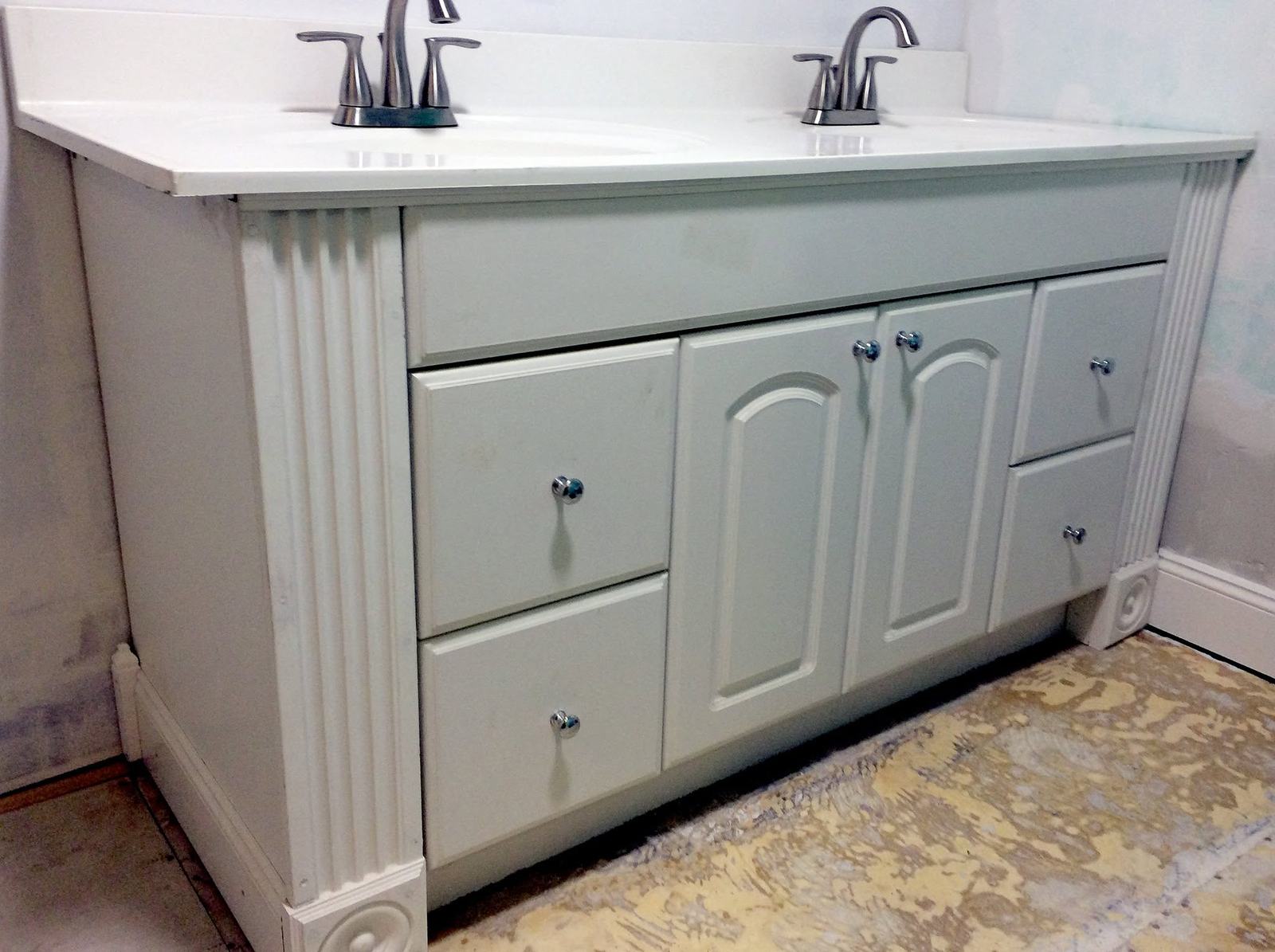
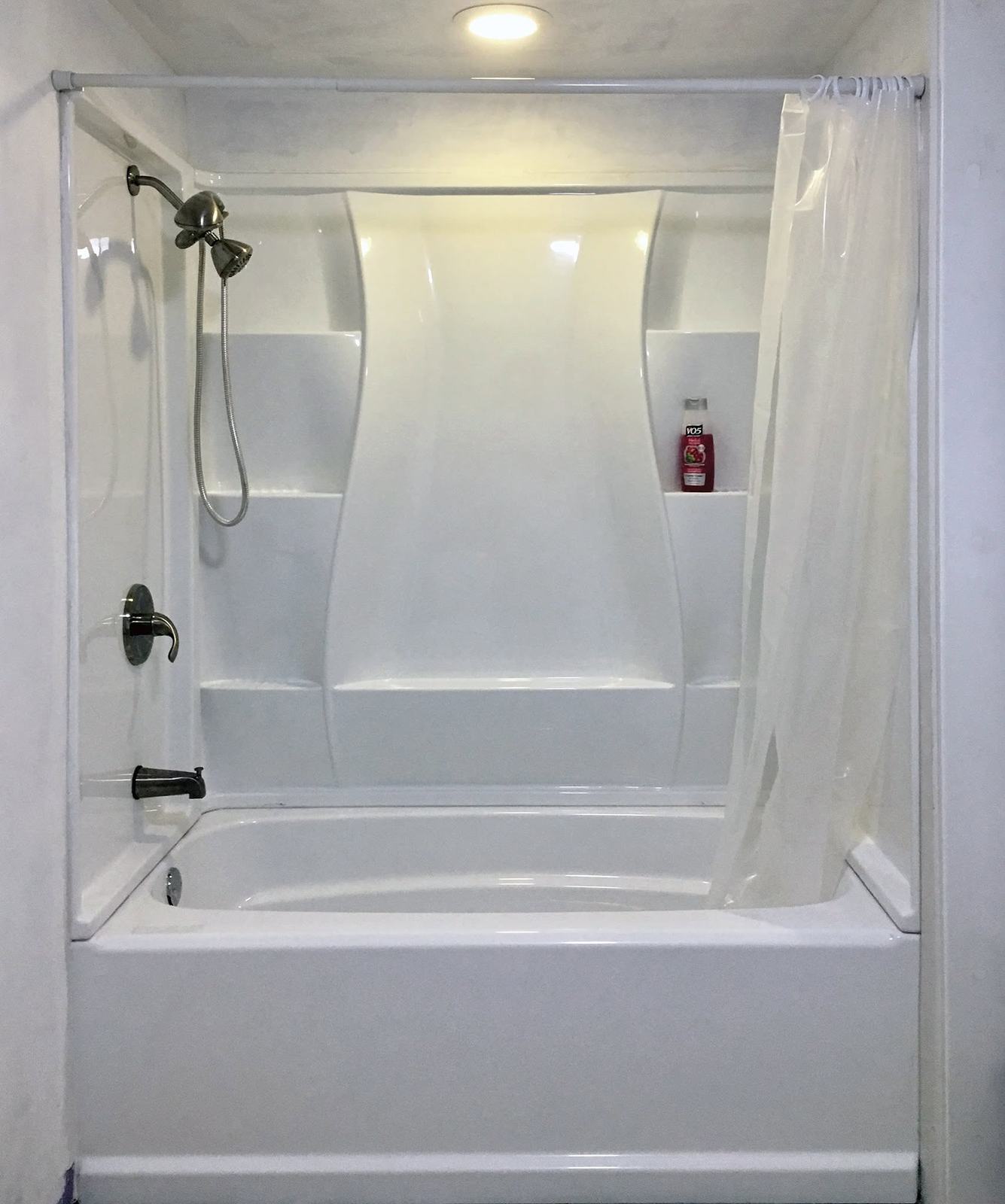
Most bathroom remodels in Clifton Park are in suburban houses built during the town's long growth spurt in the late twentieth century and after. You know the bath: a fiberglass tub and shower unit, a cultured marble vanity top with the bowl molded in, builder-grade faucets, and a fan that hums loudly and moves very little air. The framing and plumbing are newer than in a village house, so there are fewer surprises. Fewer, not none. Leaks and bad venting still do damage where you can't see it.
The three bathrooms in most Clifton Park houses
The neighborhoods went up over several decades, so no two are identical, but the pattern repeats. Upstairs there's a primary bath with a whirlpool or soaking tub sitting on a tiled deck, a separate fiberglass shower stall, a double vanity, and a wide mirror with a strip of bulbs over it. Down the hall there's a fiberglass or acrylic tub-shower unit, a single vanity with a cultured marble top, and vinyl or small ceramic tile on the floor. On the first floor, a powder room with a pedestal sink or a small vanity.
The exceptions are the older houses in the town's original hamlets and the farmhouses out on the rural roads. Those can have the same plumbing and lead paint issues as any old house. If yours was built before 1978, test painted surfaces for lead before demolition.
What people want changed
The big jetted tub on a tile deck was everywhere for years, and in a lot of houses it barely gets used. Pull it out and you've got room for a larger walk-in shower, more vanity storage, or a freestanding tub that takes up less floor. Most families keep one tub somewhere, typically the hall bath, for kids or for resale.
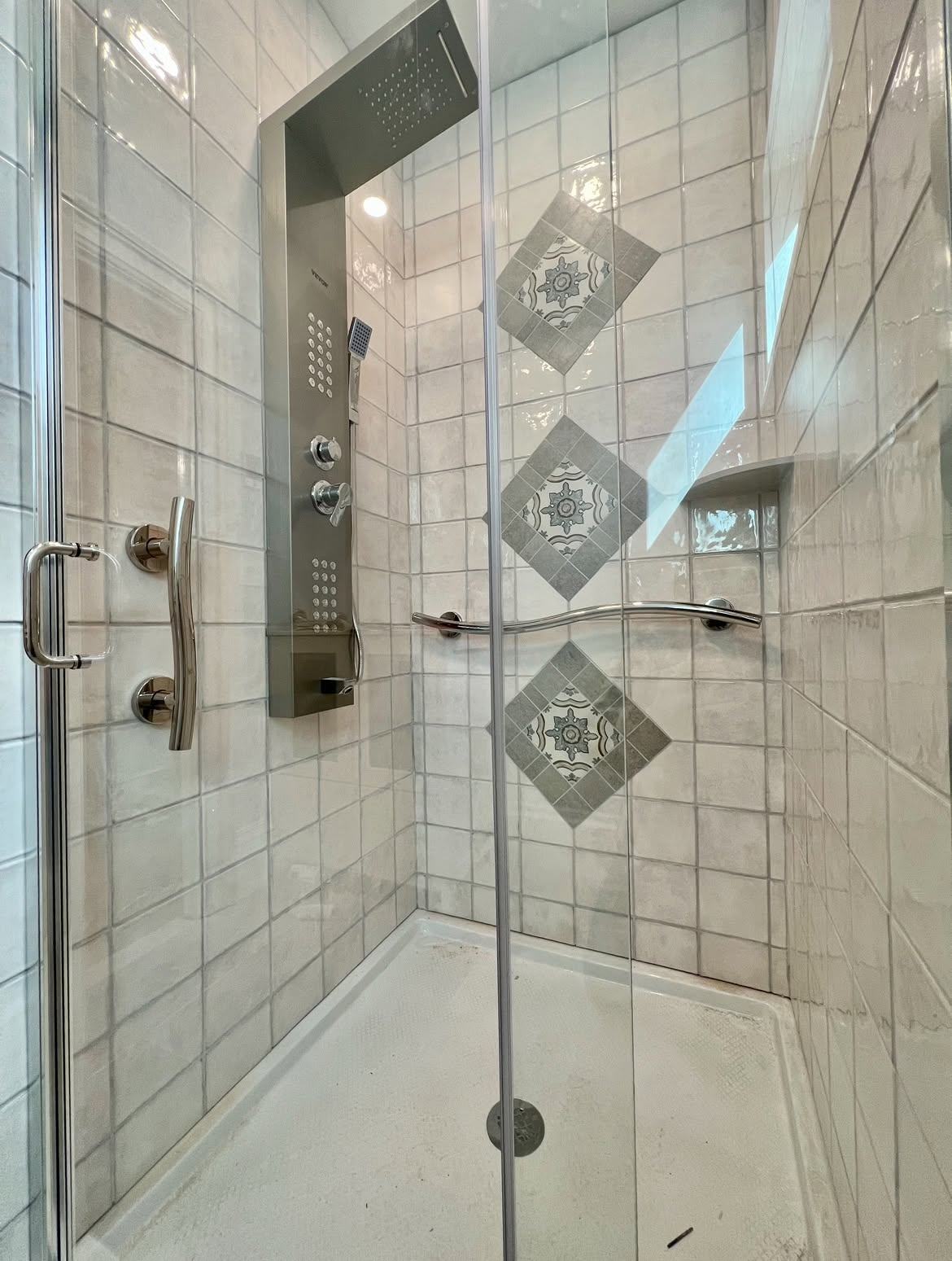
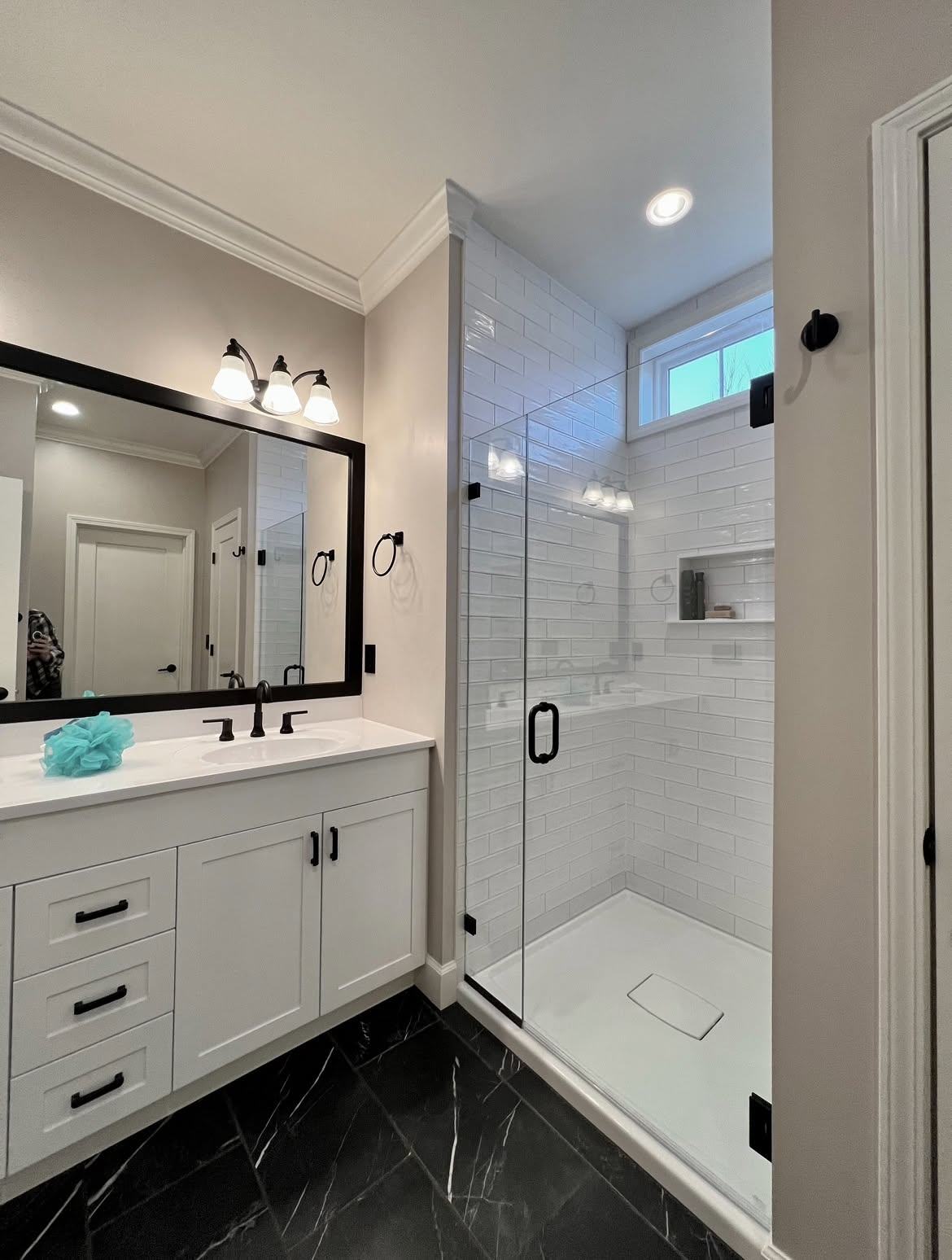
Fiberglass units crack, stain and go dull. Replacing one with a tiled shower lets you add a niche for the shampoo, a bench, and a glass enclosure. That only works if the waterproofing behind the tile is right, which is the next section. The subway-tile and accent-tile showers on our site are the kind of thing that replaces a fiberglass stall.
Cultured marble tops with the integral bowl tend to crack or craze in rings around the drain. A new vanity with a quartz or solid-surface top, drawers that hold something, and sconces on either side of the mirror instead of the bulb strip changes how you start every morning.
Then the fan. Plenty of fans from those years are loud and undersized, and some were ducted into the attic instead of outdoors. A quiet fan sized for the room with a duct to the outside is the one upgrade we'd put on every list.
What's behind the fiberglass
Newer house or not, pulling fixtures can turn up damage. The subfloor around the toilet is often soft from a wax ring that failed years ago. There's rot under the tub deck, or at the base of the shower stall where water got past the caulk. Mold in the wall cavity behind a shower unit that was never sealed at the edges. And in the attic, framing or insulation damaged by a fan that's been blowing wet air up there since the house was new.
Water stains on the ceiling below a bathroom, loose tile, or soft flooring near the tub are all clues. Our post on signs of a leaking shower behind tile explains what each one tends to mean. If mold covers a large area, get a qualified mold professional to look at it.
Waterproofing and the fan
Tile and grout shed water. They don't stop it. A tiled shower needs a continuous waterproof layer behind and under the tile, a floor that slopes to the drain, and careful sealing around the valve, the niche and the bench. A fiberglass unit relies on its own shell and the seal at its edges, which is why the trouble with those always starts at the seams.
In a Clifton Park winter, shower steam condenses fast on cold outside walls and on the ceiling under the attic. Size the fan for the room, run the duct as short and straight as you can to the outside, and leave it on for a while after each shower. A timer or humidity switch helps with that last part. Our article on bathroom exhaust fans and mold gets into sizing.
Permits and the order of work
Moving plumbing, adding circuits, or changing framing generally needs a building permit. Check with the Town of Clifton Park building department before you start. HOA rules mostly cover the outside of the house, but a new roof or wall vent cap is something to check against them before it's cut in.
A full remodel goes in roughly this order:
- Site visit, measurements and design choices.
- Written scope with the price and a payment schedule tied to each phase.
- Order the vanity, fixtures, tile and glass.
- Demolition, then a look at the subfloor, framing and pipes.
- Repairs, rough plumbing, electrical and fan duct, with inspections where required.
- Backer board and waterproofing, with the shower floor tested before any tile.
- Tile and grout.
- Vanity, toilet, fixtures and lights.
- Glass enclosure, measured once the tile is done.
For how long each stage runs, see how long a bathroom remodel takes. If you're not up for a full gut, updating a dated bathroom covers smaller moves.
What drives the cost
We don't publish prices. Moving the toilet or the shower drain costs more than leaving them where they are. A tiled shower costs more than trading one fiberglass unit for another, mostly in waterproofing and tile labor. A big primary bath with a tub, a separate shower and a double vanity simply has more of everything. Anything we find during demolition, like rotted subfloor or framing, gets written up as a change order and agreed before the work keeps going.
Frequently asked questions
Can I replace my fiberglass tub and shower with tile?
Yes. The unit comes out, the walls get backer board and a waterproof layer, and the tile goes on over that. The tub itself can stay or go, based on its condition.
Should I keep a bathtub in the house for resale?
Lots of buyers with young kids look for at least one tub. Pulling the big tub out of the primary bath and keeping the one in the hall bath is the common middle ground.
Do I need a permit for a bathroom remodel in Clifton Park?
Generally, if plumbing, electrical or framing changes. Swapping fixtures in the same spots may not need one. Check with the town building department before work starts.
We design and build bathrooms in Clifton Park, Halfmoon and the rest of the Capital Region, and you deal with one person from the first visit to the glass going in. Some of the finished rooms are on our bathrooms page.