How often should you recaulk a tub or shower?
The usual interval for bathroom caulk, the signs it has failed, the difference between caulk and grout, and what it means when new caulk keeps cracking.
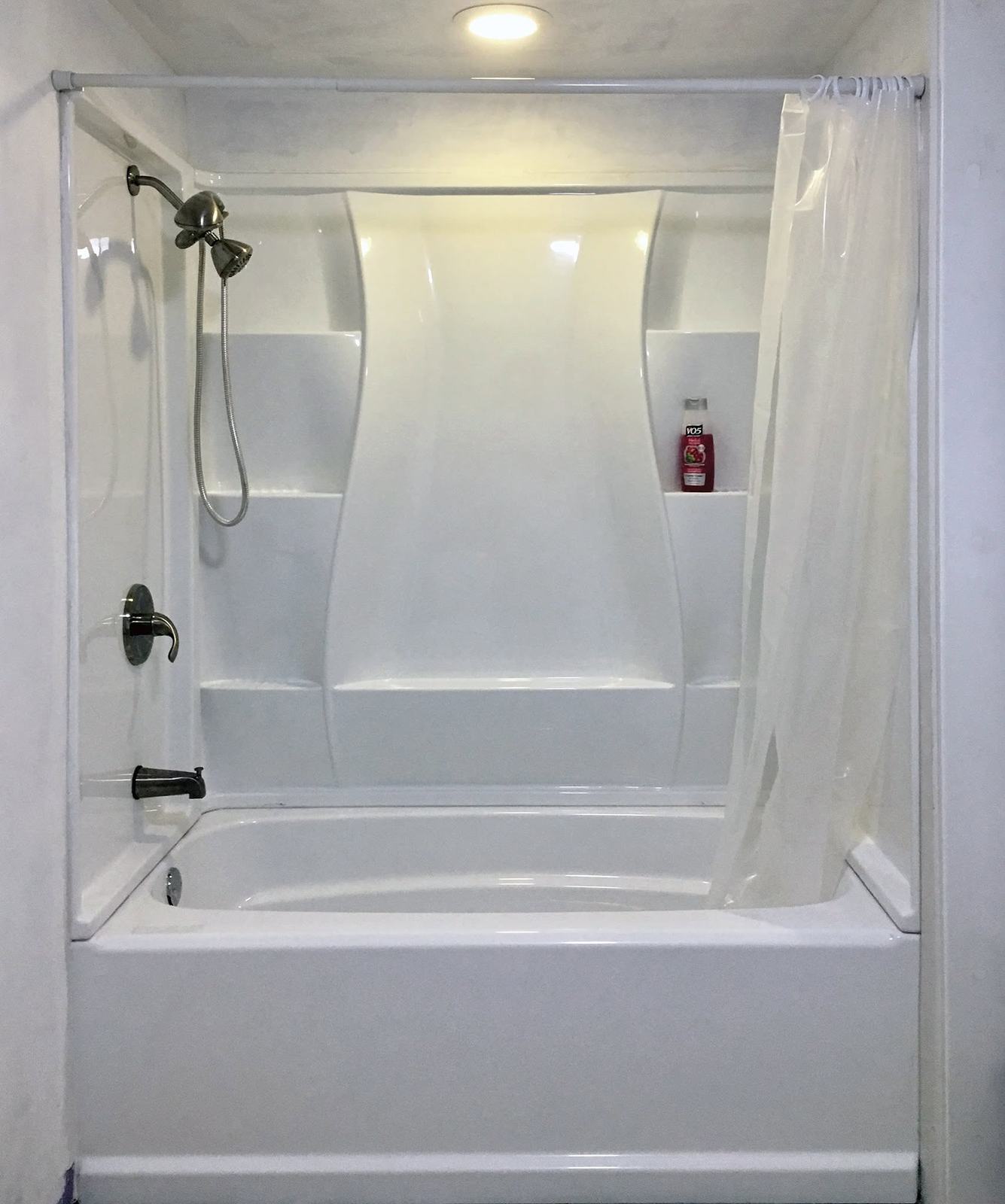
Plan on recaulking a tub or shower every one to two years, and sooner if you see mold that won't wash off, cracks, gaps or edges lifting. Caulk is the soft bead where the tub meets the tile, down the inside corners and around the fixtures. It wears out long before the tile and grout around it do. Replace it on time and you keep water out of the wall and the floor.
Caulk and grout do different jobs
They look alike from across the room. Grout fills the narrow joints between tiles on a flat wall or floor, and once it cures it's hard as rock. Caulk goes where two surfaces meet at an angle, or where two different materials meet, because those joints move. A tub drops a little when it fills with water and someone steps in. Walls and floors swell and shrink with the seasons. Rigid grout in those spots cracks. A bead of caulk stretches.
So caulk belongs where the tub or shower pan meets the wall tile, in the vertical inside corners where two tiled walls meet, where tile runs into a window sill or another material, and along the edges of a glass door frame or fixed panel. Around the spout, valve trim and showerhead escutcheons, follow what the fixture manufacturer says.
If those joints got grouted when the shower was built, the grout usually cracks within a few years. Dig it out and caulk the joint instead, and the problem tends to go away.
How to tell it's failed
Get close and look along every caulked joint, especially the bottom corners and the long horizontal line where the tub meets the wall.
Black or pink spots that don't scrub off are the most common sign. Mold sitting on the surface often cleans up. Mold that's grown under or into the caulk won't, and that caulk has to come out. If you can slide a fingernail between the caulk and the tub or tile, water can get behind it too. Old caulk also dries, shrinks and cracks along its length, or the edges start peeling up. And caulk that's gone yellow or dingy and won't clean up is just old.
A busy family shower tends to need fresh caulk closer to once a year. A guest bath used a few times a month can go longer. In a bathroom without decent ventilation, caulk grows mold fast no matter how often you redo it. Fix the fan first; our guide to bathroom fan mold prevention covers that.
Which caulk to buy
Buy a tube labeled for kitchen and bath, with a mildew-resistant formula. Past that, you're picking between three kinds.
100% silicone is the most flexible and lasts the longest in water. It can't be painted, it's harder to tool into a neat line, and new caulk of any kind won't stick to silicone residue, so removal has to be thorough. Siliconized acrylic, sometimes sold as latex, goes on easier, cleans up with water and takes paint, but it generally doesn't last as long in a wet spot. Hybrid or polymer formulas try to split the difference; read the label to make sure it says tub and shower.
For the tub-to-tile joint and the shower corners, we'd use 100% silicone kitchen and bath caulk. Those joints get the most water and the most movement. Whatever you use, match the color to the grout or the tub, and check the cure time on the tube before anyone showers.
How to recaulk
This is a fair homeowner job if you're patient with the prep. Most failed DIY caulk jobs skipped step one or three.
- Get all the old caulk out. Never caulk over old caulk. Use a plastic scraper or a utility knife held low, and be careful on an acrylic or fiberglass tub, which scratches easily. A caulk remover can soften stubborn silicone.
- Clean off the residue and any mold. Silicone leaves a film new caulk won't grab. Wipe with rubbing alcohol or a cleaner made for it, and treat any mildew stains.
- Let the joint dry all the way. Moisture trapped under new caulk means mold and poor adhesion. Leave the bathroom alone overnight with the fan running.
- For the tub joint, fill the tub with water first. The weight settles the tub a little, so you caulk the joint at its widest and the bead doesn't get stretched the first time someone climbs in.
- Run one continuous bead and tool it. Painter's tape on both sides keeps the line clean. Smooth it with a caulk tool or a wet fingertip and pull the tape before the caulk skins over.
- Let it cure. Go by the label, which is often around a day.
When new caulk keeps cracking
If fresh caulk cracks or pulls loose within a few months, something is moving more than it should, or water is getting behind the joint. A tub that was never set in a bed of mortar or foam flexes every time someone stands in it. A subfloor gone soft from an old leak lets the tub sink. Tile comes loose because the wall behind it is wet. Recaulking won't fix any of those.
Look for loose tiles, a soft spot in the wall, stains on the ceiling below, or a musty smell. Our post on the signs of a leaking shower behind tile explains how to tell a surface problem from a hidden one. Grout has its own schedule, covered in how often to seal grout.
Older Saratoga Springs houses are full of tubs that have been recaulked over and over for decades, layer on layer, hiding a gap that keeps getting wider. If yours has reached that point and the bathroom needs more than fresh caulk, our guide to a bathroom remodel in Saratoga Springs covers what the bigger job involves.
Frequently asked questions
Should you caulk or grout the corner of a shower?
Caulk. Inside corners move a little as the house expands and contracts, and rigid grout there tends to crack. Pick a caulk color that matches the grout so the corner doesn't stand out.
Can I put new caulk over old caulk?
No. New caulk doesn't bond well to old caulk, silicone especially, and any mold or moisture under the old bead stays trapped in there. Take the old bead out completely, clean and dry the joint, then run a new one.
How long should caulk last in a shower?
One to two years in a shower that gets used every day, before it starts to discolor, shrink or pull away. Run the fan and wipe the joints down after showers and you'll get closer to the long end.
We remodel bathrooms around Saratoga Springs and the rest of Saratoga County, including tearing out a tired tub surround and building a new shower with real waterproofing behind the tile. Examples are on our bathrooms page.