Signs your bulkhead door needs to be replaced
How to tell whether a steel or wood cellar door can be repaired or should be replaced, what causes leaks around it, and how replacement works.
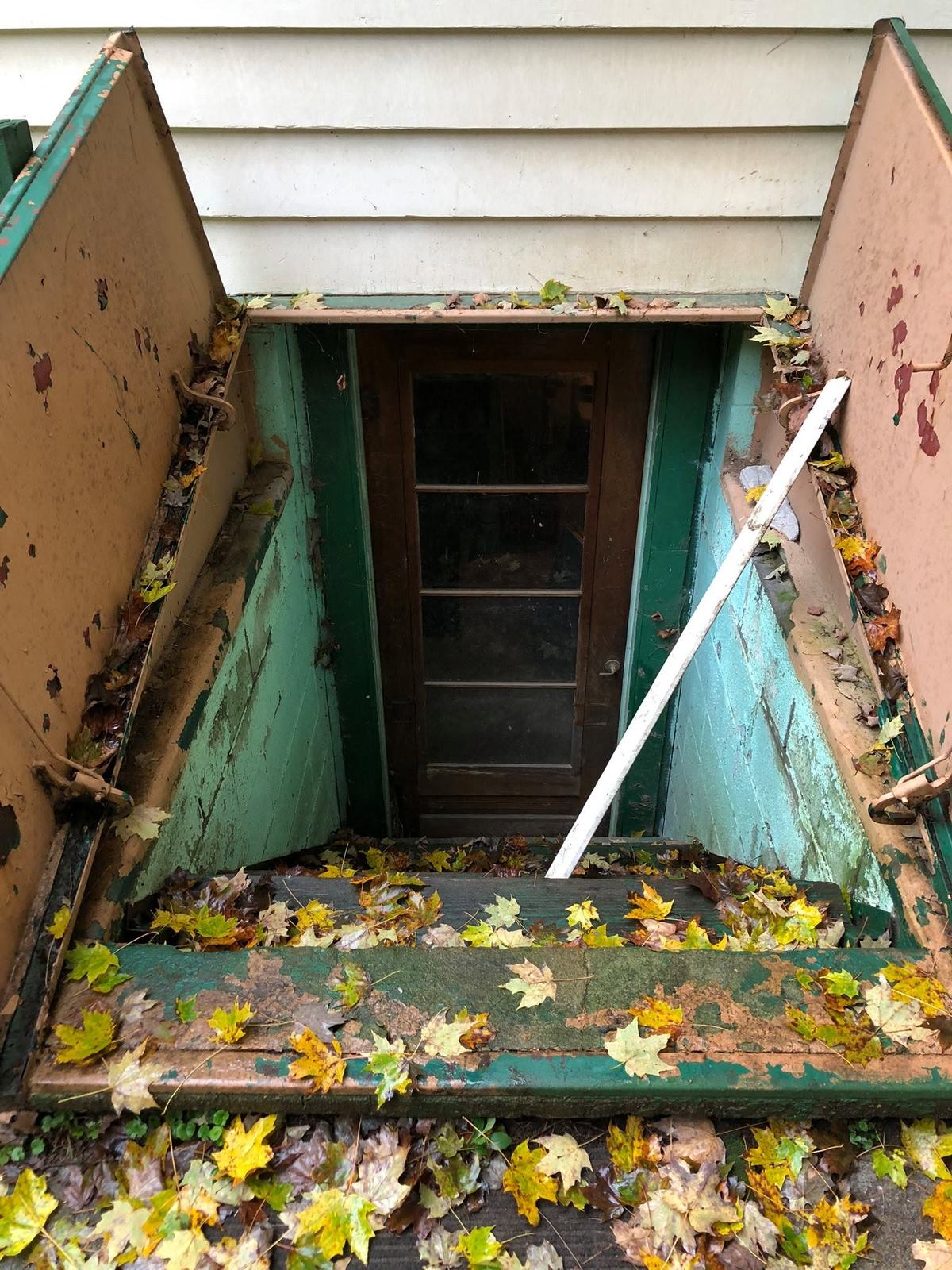
Replace a bulkhead when the steel has rusted through, the doors won't close and lock, or water gets past the frame onto the cellar stairs every time it rains or the snow melts. Surface rust and stiff hinges can be fixed with a wire brush, rust converter and paint. Holes, warped panels and a frame pulling off the foundation can't. In Saratoga County a bulkhead spends months under snow with road salt blown up against it, and most steel doors get there sooner or later.
Why they wear out
A bulkhead, or cellar door, is the slanted pair of doors over an outside stairway down to the basement. Most newer ones are steel, set on a sill or on top of a concrete or masonry areaway. Plenty of older houses around here still have wood bulkheads, sometimes on a wood frame sitting right on the foundation.
They take a beating. Snow piles up on the slope and melts slowly, and the meltwater runs down to the bottom edge and into the joint with the house. Salt and de-icer tracked off the walk and the driveway eat at the steel. Kids, dogs and delivery drivers walk across the top. Every freeze and thaw works at the seal between the frame and the foundation. The paint goes first, then rust starts at the seams and edges, and eventually the doors stop sitting flat.
What to look for
Walk around it, and open and close the doors a few times.
Start with rust. Light surface rust is cosmetic. Pinholes, or flaking you can push a screwdriver through, mean the steel is gone, and that shows up first along the bottom edges and the seams.
Then see how the doors close. If they won't lie flat or latch, the panels are warped or bent, and the gaps let in water, cold air, bugs and the occasional chipmunk. Hinges that are seized or broken, where the metal around them is too corroded to take new ones, put you in the same spot.
Go down the cellar stairs after a rain or a melt. Water on the steps with the doors shut tight is the sign most people notice first. Push on the frame. If it rocks on its base or has pulled away from the house, it's done.
On a wood bulkhead, check for rot in the doors. On a steel one, check the wood sill or header underneath it. And if the doors have gotten too heavy or awkward to open safely because a spring or support failed, that's a reason on its own.
If all you've got is faded paint and a little surface rust, clean it, treat the rust, and repaint with a metal primer and exterior enamel. That can buy several more years.
Find the leak before you buy a door
New doors don't fix every leak, so figure out where the water's coming from first.
| Where water shows up | Likely cause |
|---|---|
| Drips from the top of the doors | Gaps between panels, failed seals or a warped door |
| Water at the top of the stairs near the house | Failed seal where the frame meets the siding or foundation wall |
| Water at the bottom step or areaway floor | Groundwater or surface runoff, often from grading or a downspout |
| Damp areaway walls | Cracked concrete or masonry, or soil sloping toward the house |
A downspout dumping next to the bulkhead is a common culprit. So is a patio or a strip of soil that's settled and now pitches toward the house. Regrade it and extend the downspout as part of the job. A brand-new bulkhead will still leak at the bottom if the yard is draining into the areaway.
How a replacement goes
Steel bulkheads come in standard sizes, so we start by measuring the opening: length, width, height of the frame, and the slope. Those numbers tell you whether a stock unit drops right in or the base has to be built up or cut down.
- Pull the old doors and frame, cutting them apart if they're rusted in place.
- Inspect and fix the base, whether that's a concrete or masonry areaway wall, a wood sill, or the foundation itself.
- Set the new frame and fasten it to the base and the house.
- Seal the joint at the house and at the base with a durable sealant, and flash where the siding meets the frame.
- Adjust the doors so they close flat and latch, and put on the hardware and any lock.
When an old wood bulkhead is sitting on a rotted wood frame, the base needs more, like a new pressure-treated sill or a small concrete curb. Cracked or crumbling areaway walls may need masonry repair before anything else. And worn cellar stairs often get rebuilt at the same time, since the doors are off and there's room to work; see basement stair repair. A worn steel bulkhead replaced and a cellar stair rebuilt are both on our site.
Late spring through fall is the easy time, because sealants and masonry want warm, dry weather. If yours fails in January, it can be secured temporarily and replaced when the weather allows.
Safety and code
The steps under a bulkhead are still stairs, and with worn treads, no rail and a single bulb they're a common place to fall. The New York State Residential Code requires a handrail on stairs with four or more risers. If your cellar stairs don't have one, put one up.
If the basement is finished, or has or will have a bedroom, egress rules may change what kind of door and stairway you need. Check with your town or city building department before you settle on a design.
A wood bulkhead and the trim around it may have lead paint. If the house was built before 1978, test before you scrape or cut.
Making a steel bulkhead last
Brush the snow off after big storms instead of letting it sit for weeks. Keep salt and de-icer off the doors, and use sand or a salt-free product on the walk next to them. Touch up chips and scratches with metal primer and paint once a year. Oil the hinges and check the latch every fall. Keep the downspouts and the grading sending water away from the areaway.
Those fit right into a fall home maintenance checklist, and the bulkhead belongs on your spring inspection after winter too.
Frequently asked questions
Can a rusted bulkhead door be repaired instead of replaced?
Light surface rust can be cleaned, treated and painted. Once rust has eaten through the panels or frame, or the doors are warped and won't latch, replace it. Patches on thin, corroded steel rarely hold.
Why does my bulkhead leak even when it's closed?
The doors may be warped, or the seal where the frame meets the house may have failed. Water also often gets into the areaway from the yard through bad grading or a nearby downspout. Find the source before deciding on new doors.
Can a new steel bulkhead replace an old wood one?
Generally, yes, though the base often needs work first. Wood bulkheads frequently sit on a sill that's rotted, and the opening may not match standard steel sizes, so the base may have to be rebuilt or adjusted to fit.
Bulkheads, the cellar stairs under them, and the drainage problems around them are all part of our bulkheads and outdoor work. We'll measure the opening and tell you whether a stock door fits or the base needs work first.