Staircase restoration: when to repair and when to replace
The common problems in old staircases, which ones can be repaired with the original parts kept, when replacement makes more sense, and the code and paint questions to settle.
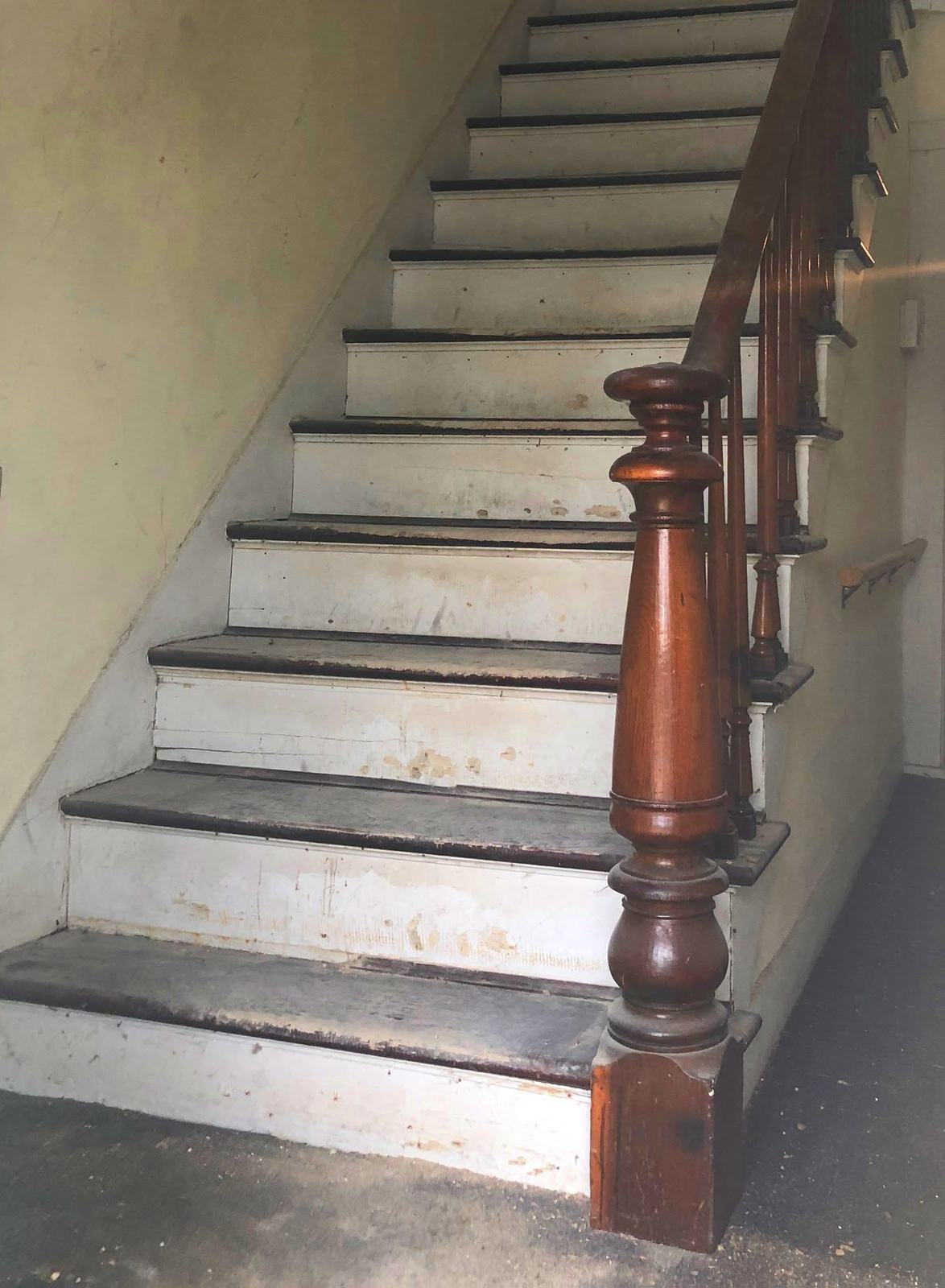
Most old staircases should be repaired, not replaced. Squeaky treads, loose balusters, a wobbly newel post and a tired finish can all be fixed with the original parts left in place. Replace the stair when the structure underneath has failed, when it's unsafe in a way repair can't fix, or when a bigger remodel moves it.
Why we'd keep the old one
In a lot of older Saratoga Springs houses the front staircase was the showpiece. Turned newels, shaped handrails, carved brackets along the open side, hardwood treads. Somebody made those by hand or on machinery that's hard to find now. A shop can copy them, but it takes time and skill, and what you get is a copy.
Then there's the wood itself. Old stairs were built from dense old-growth lumber that's had a century or more to settle down. A stringer or tread that's stayed straight that long isn't going anywhere, and it's often more stable than anything you'd buy to replace it.
Squeaks
A squeak is wood rubbing on wood, or on a loose nail, as a tread or riser moves under your weight. The usual culprits are the wedges under the treads shrinking, glue blocks letting go, or a tread separating a hair from the riser behind it.
If you can get under the stair from the basement or a closet, we fix squeaks from below. Reglue, add glue blocks, drive in new wedges, and nothing changes on top. If the underside is closed in with plaster, we work from above, fastening the tread down and hiding the fasteners afterward.
Loose balusters
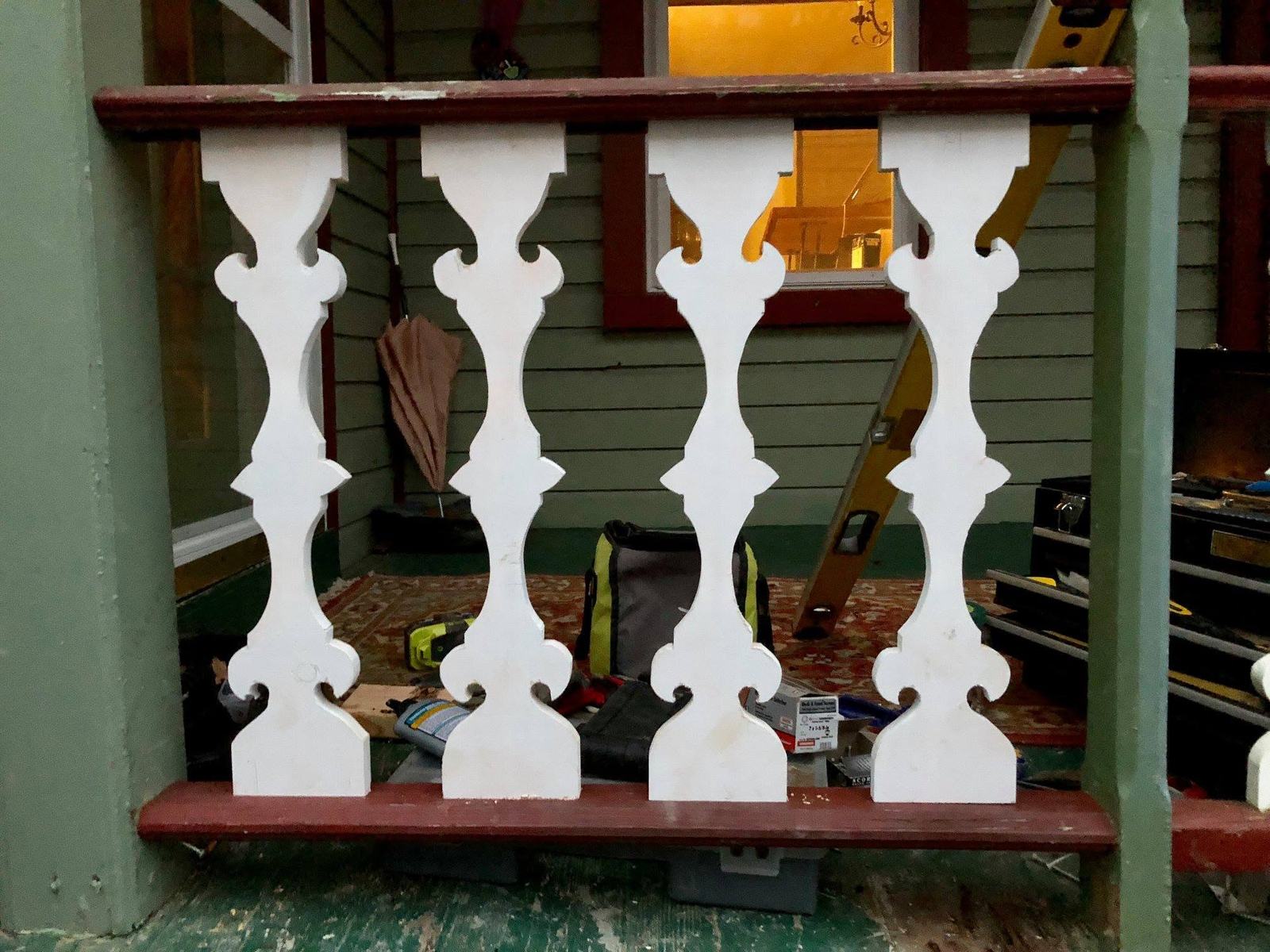
Balusters work loose where they meet the rail or the tread, nearly always because the glue failed or the wood shrank. Most get reglued and refastened. If one's missing or broken, a turner can copy a surviving one so the new piece matches the rest of the run.
A newel that wobbles
The newel anchors the bottom of the handrail, and when it moves the whole rail feels unsafe. Newels are often fastened down through the floor framing, and those connections loosen over the decades. The fix is usually from below: tighten it or reinforce it. You don't have to lose the post to do that. One staircase on our site was restored with its original turned newel kept, and that's often possible even when the post has gotten pretty loose.
Worn treads
Treads wear a dip in the middle from generations of feet. Shallow wear sands out and gets refinished. Deep wear, cracks or splits mean replacing that tread with matching wood and the same nosing profile. Swapping a few treads is a small job next to replacing a staircase.
The handrail and the code
The handrail is the most important safety part of any stair. The New York State Residential Code calls for a handrail on stairs with four or more risers, 34 to 38 inches above the tread nosing. Plenty of old staircases have a pretty rail on the open side and nothing on the wall side, or a rail that's too low by today's standard. A wall-mounted handrail is often the simplest way to make an old stair safer without changing how it looks. There's more on the rules in when stairs need a handrail.
Paint, varnish and lead
Old staircases usually wear several coats of paint or old varnish, and stripping them can turn up beautiful wood. In any house built before 1978, though, get the finish tested for lead before anybody sands, scrapes or puts stripper on it. Stairs connect every floor, so lead dust from stair work travels through the whole house. If the test comes back positive, the work has to follow lead-safe practices.
Sometimes we'd just repaint. Balusters with fine turned detail are miserable to strip. Painted balusters with a stained rail and treads is a traditional look in a lot of period houses anyway.
When we'd replace it
Restoration isn't always the answer. We'd replace the stair when the stringers are cracked or rotted or have pulled off their supports, or when water or insects have gotten into the structure. Same if the rise and run are so uneven that the stair is a trip hazard nobody can repair out of it. A remodel that moves or turns the stair is another reason, and so is a later replacement stair that was built poorly and has nothing historic about it.
Basement and cellar stairs end up here more often than front staircases. They're simpler, often damp, and sometimes slapped together. Our posts on basement stair repair and on replacing a worn bulkhead door cover the stairs at the bottom of the house.
A replacement stair generally has to meet current code for rise, run, headroom, width, handrails and guards. Check with your building department about permits and how the code applies to your house. If the old stair has historic value, the newel, rail and balusters can sometimes be salvaged and reused even when the structure under them is rebuilt.
The order we work in
We look at the stair from above and from below first: treads, risers, stringers and the newel connection, sorting out what's loose, what's worn and what's damaged. In an older house the paint gets tested before any finish work. Structural repairs come next, reglued, reinforced and refastened from underneath where we can reach. Failed parts get replaced with matching profiles. Then the handrail gets made safe and brought up to where it should be, and the finish goes last, whether that's refinishing, repainting or some of each.
Stair work often rides along with a bigger job. Our guide to restoring an old house in Saratoga Springs talks about where it falls in the order of repairs.
Frequently asked questions
Can a squeaky staircase be fixed without removing the treads?
Usually. If you can reach the underside, squeaks get fixed from below with glue, blocks or wedges. If you can't, the treads can be fastened from above with hidden fasteners and the surface touched up.
Should I restore my original staircase or replace it?
Restore it, in most older houses. The original wood is dense and stable, and hand-turned or carved parts are slow and hard to reproduce. Restoring keeps what's there and tears up a lot less of the house than a full replacement.
Does a restored staircase need to meet current code?
Repairing an existing stair generally doesn't mean rebuilding it to current standards, but adding a handrail where there isn't one makes it a lot safer. Replacing the stair or making major changes generally does mean meeting current code. Check with your building department about your project.
Old staircases, porches, trim and ceilings in Capital Region houses are a big part of our restoration and built-ins work, and we save the original pieces whenever they'll hold.