How often should you seal grout?
A practical schedule for sealing cement grout in showers, kitchens and entry floors, the quick test that tells you it is due, and when grout needs replacing instead.
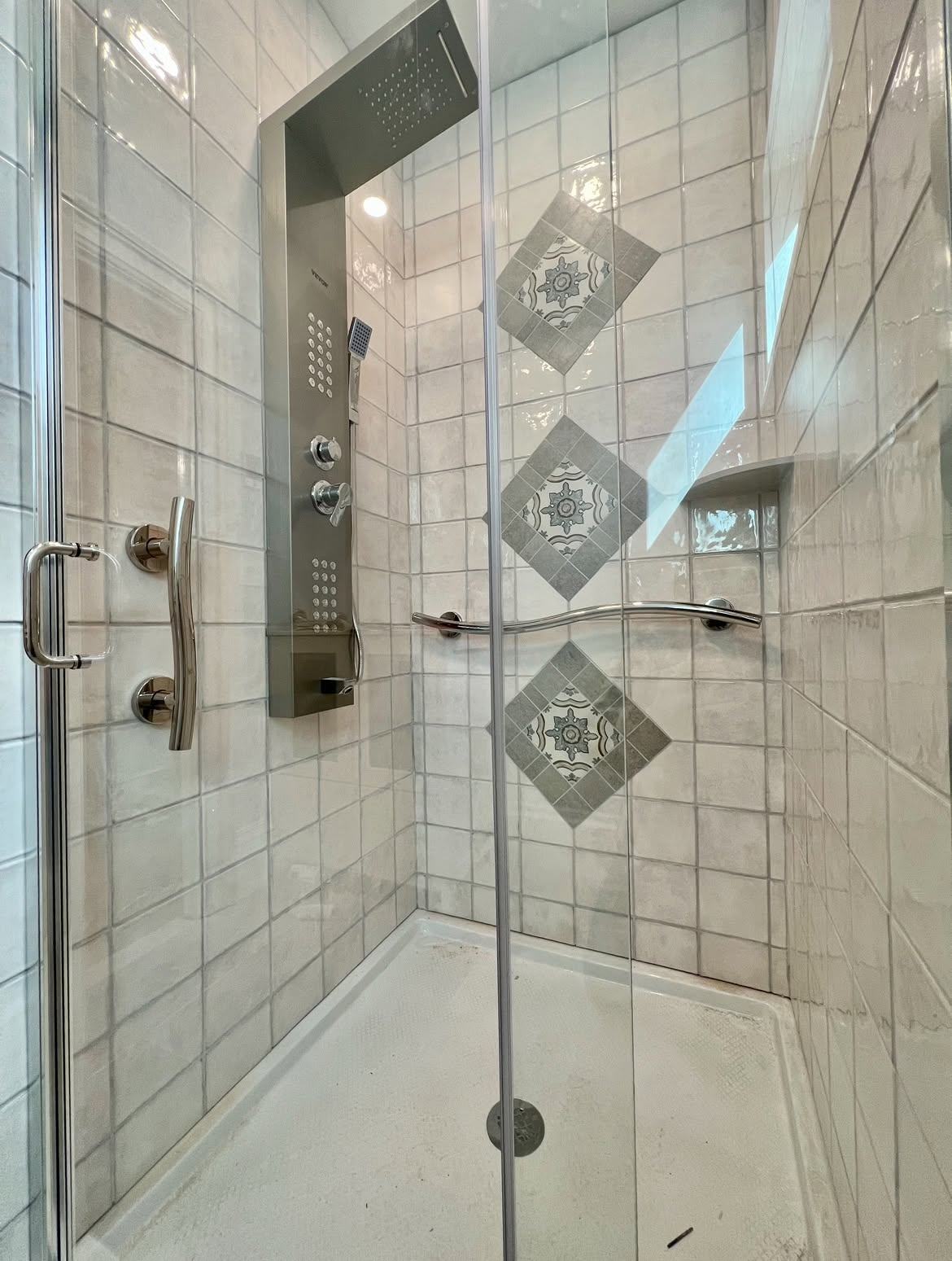
Seal cement grout in a shower about once a year. On floors, backsplashes and anywhere else that sees less water, every one to three years is typical. To check, put a few drops of water on a grout line. If they bead up, the sealer's still working. If the grout darkens within a few minutes, reseal. Epoxy grout and some premixed grouts don't need sealer at all, so find out what's in your joints before you buy a bottle.
What sealer does and doesn't do
Ordinary grout is cement, sand and water. Cured, it's hard, but it's porous, full of tiny channels that soak up water, soap scum, body oil and dirt. That's why white grout turns gray along the bottom of a shower, and why kitchen floor grout goes dark in the path between the sink and the stove.
A penetrating sealer soaks into those channels and makes the grout shed water and resist stains. It doesn't make grout waterproof. It won't stop water that's already getting behind the tile through cracks or failed caulk. Treat it as stain protection that also slows how much water the grout drinks between showers.
In a properly built shower, the waterproofing is behind the tile: a membrane over cement board, or a similar system. Grout and sealer are the outer skin. If your grout is crumbling, cracked or missing in spots, sealer won't help, and you should read our guide to the signs of a leaking shower behind tile.
The water drop test
Drop a little water on grout lines in a few different places. Try the shower floor, the wall where the spray hits, and a spot that rarely gets wet. Wait three to five minutes.
If the water beads on top, you're fine. If the grout darkens slowly, the sealer is wearing thin and you should plan to reseal soon. If it darkens right away, the grout is soaking up water freely and it's due now.
There's another tell you can see without the test. Sealed grout dries fast after a shower. Grout that's still dark hours later is holding water, and that damp grout is what mildew lives on.
How often, room by room
| Location | Typical interval | Notes |
|---|---|---|
| Shower walls and floor | About once a year | More often for showers used several times a day |
| Tub surround above the tub | Every 1 to 2 years | Lower walls wear faster than upper walls |
| Kitchen backsplash | Every 2 to 3 years | Behind the stove and sink may need it sooner |
| Kitchen and bathroom floors | Every 1 to 3 years | High-traffic paths wear first |
| Entry and mudroom tile | About once a year | Winter salt and slush are hard on grout |
That last row is the one Capital Region houses tend to forget. From November into April, boots drag snowmelt, sand and road salt across the mudroom and front hall tile. Salt that dries in the joints leaves white deposits and wears down the surface. Put a heavy mat at the door, damp-mop with plain water or a neutral cleaner, and reseal once a year in late spring after the salt season is over. Do that and the entry grout ages at the same pace as the rest of the house.
Grouts that skip the sealer
Epoxy grout is resin and hardener instead of cement. It's very stain resistant and doesn't need sealing. Some premixed urethane or single-component grouts are also made to resist stains without a separate sealer; check the manufacturer's information. A lot of cement grouts now include additives for stain resistance, but most of those manufacturers still say to seal.
If you don't know what's in your joints, assume cement grout and do the water test. If you're tiling a new shower or regrouting an old one, epoxy or a high-performance grout takes sealing off your list for good. We like it in showers for exactly that reason, though epoxy is fussier to install and cleanup has to happen fast.
How to seal grout
- Clean it well. Use a pH-neutral tile cleaner and a stiff nylon brush, because sealer locks in whatever dirt is there. Skip harsh acid cleaners on cement grout and natural stone; over time they etch the surface and strip what sealer is left.
- Let it dry all the way. Grout can look dry on top and still hold water underneath. Give it at least a day without use, longer in a humid bathroom. The exhaust fan helps; see our post on bathroom fan mold prevention.
- Put penetrating sealer on the joints. An applicator bottle with a small wheel or brush tip keeps it on the grout. Wipe any that gets on the tile before it dries, since some products leave a haze on glazed tile.
- Add a second coat if the product calls for one.
- Let it cure. Keep the area dry for the time on the label before you shower or mop.
New cement grout has to cure before it can be sealed. Manufacturers usually call for a few days; follow the grout and sealer instructions.
Natural stone like marble, travertine or slate usually needs the tile itself sealed too, often with the same product. Glazed ceramic and porcelain don't.
When to regrout instead
Sealer can't save grout that's cracked, crumbling, sandy when you rub it, or missing in places. It can't fix grout stained so deep that scrubbing does nothing, either. Often the old grout can be ground out and replaced without pulling the tile, as long as the tiles are solid and the wall behind them is dry. Tap each tile lightly with the handle of a screwdriver. A hollow sound, or a tile that shifts, points to a bigger problem behind it.
The joint where the tub meets the wall and the vertical inside corners should be caulked, not grouted. Our guide on how often to recaulk a tub or shower covers those. If the whole bathroom is starting to look tired, these ideas to update a dated bathroom run from a regrout up to a new shower.
Frequently asked questions
Can you seal old grout?
Yes, if it's solid and clean. Deep-clean it, let it dry thoroughly, then put on a penetrating sealer. Cracked or crumbling grout gets replaced before anyone seals it.
Does sealing grout prevent mold?
It helps, because sealed grout soaks up less water and dries faster, so mildew has a harder time getting started. The fan does more. A bathroom fan that actually vents outdoors, and runs long enough after a shower, prevents more mold than any sealer.
Should I seal grout on a new tile floor right away?
No. Cement grout has to cure first, usually for a few days depending on the product and the conditions. Check the grout manufacturer's instructions, then seal once that time has passed and the floor is clean and dry.
We build and remodel bathrooms across the Capital Region, including new showers waterproofed behind the tile, with the grout picked for how the room gets used. Our bathrooms page shows some of the tile work.