How to inspect a porch railing, and when it needs repair
A step-by-step inspection for wood porch railings on older Capital Region homes, the guard rules that apply, and how to decide between repair and rebuilding.
A porch railing needs repair when it moves under a firm push, when the posts are soft at the base, or when balusters are loose, cracked or missing. The trouble nearly always starts where water sits: the bottom rail, the foot of each post, and the joints where rails meet posts. Saratoga Springs has a lot of old porches, and a once-a-year look catches the problems while they're still a few parts and not the whole railing.
Push on it
Stand next to the railing and lean into the top rail with steady pressure. Do it halfway between two posts, then again right at each post. A sound railing gives a little and springs back. Then grab each post near the top and rock it.
You're feeling for a post that rocks at the bottom or leans out, a top rail that sags between posts or moves on its own, balusters that spin or rattle, and gaps opening where a rail meets a post or the house.
If the railing moves much at all, treat it as unsafe until it's fixed. A guard is there to stop somebody from going over the edge, and one that shifts under your hand won't stop a person who trips into it. On a high porch, keep people off that section.
Where wood railings rot
The foot of the post is the big one. A porch post sits on the floor boards or is notched into the framing, and water runs down it and soaks into the end grain at the bottom. Press a screwdriver into the lower six inches of each post and you'll find soft wood fast if it's there. Rot here is the worst news on a railing, because the post holds up everything else.
The bottom rail is next. It sits a few inches off the floor and catches snow, leaves and standing water all winter. A bottom rail with no gap underneath, or with a flat top instead of a sloped one, rots from the top down. Look for soft spots, peeling paint and dark stains.
Then the joints. Older railings were often toenailed together, and decades of swelling and shrinking work those nails loose. Look for nails backing out, cracks at the ends of rails, and joints that have opened up enough to let water in.
The balusters go last, usually at the bottom where they sit on the bottom rail. Count how many are cracked, split or soft. A few can be copied. If most of them are going, the bottom rail under them is probably going too.
What the code says about porch guards
The New York State Residential Code, which is based on the International Residential Code, requires a guard on a porch or deck surface more than 30 inches above grade. On a house that guard has to be at least 36 inches high, with openings small enough that a 4-inch sphere can't pass through. Porch stairs with four or more risers need a handrail, typically 34 to 38 inches high measured from the tread nosings. Our post on when stairs need a handrail covers the stair side.
A lot of old porches were built before any of that, with rails around 30 inches high or balusters spaced wider than 4 inches. Whether a repair can keep the original height, or a rebuild has to come up to current code, depends on how much work you're doing and what your building department says. For a full replacement, plan on current code. Check with your town or city building department before you start. Our post on building permits in Saratoga Springs has the general questions to ask.
When an original railing is too low, one fix is to keep the old railing and add a slim upper rail or a second guard set behind it. In a historic district an exterior change like that can need Design Review Commission approval.
Fix it or rebuild it
Roughly from smallest job to biggest:
| What you find | What we'd do |
|---|---|
| A few loose balusters, rails and posts solid | Refasten or replace those balusters, then paint |
| One soft post base, the rest sound | Replace or splice that post and refasten the rails to it |
| Rotten bottom rail, good top rail and balusters | New bottom rail, reuse or copy the balusters |
| Several soft posts, sagging rails, lots of split balusters | Rebuild the railing, matching the original if you want it |
| Rot running into the porch floor framing | Fix the structure first, then the railing |
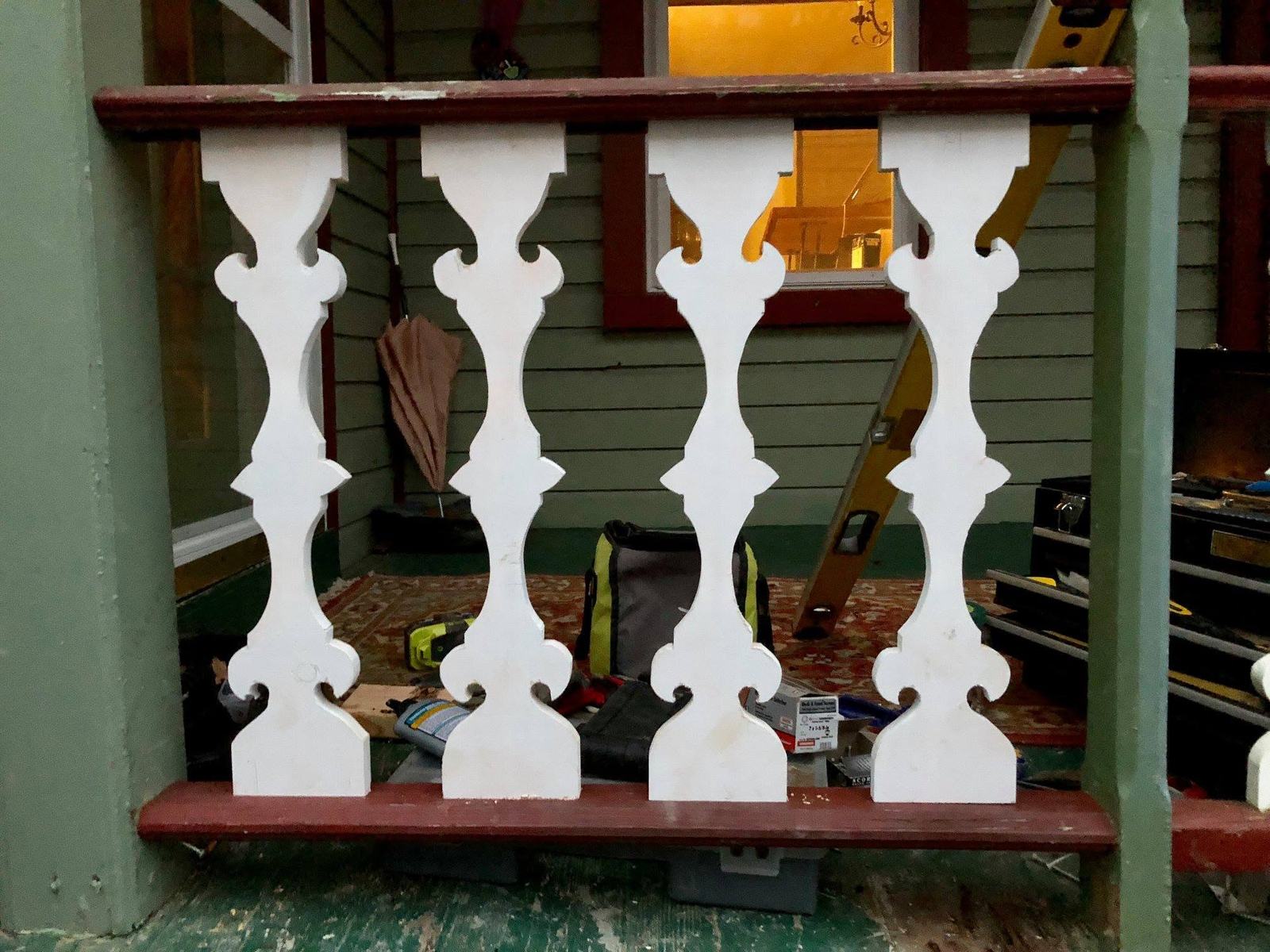
When we rebuild an old railing we copy the original. A scroll-cut or turned baluster can be traced and reproduced. Then we build the new one to shed water better than the old one did: a sloped top on the bottom rail, a small gap between the bottom rail and the floor, primed end grain, and rot-resistant material where water sits. Wood is still the right choice where you want the detail, since it can be cut to match. Cellular PVC and composite parts don't rot and need less paint, so on a lot of rebuilds we use them low and wood up where people look.
Lead paint
If the house was built before 1978, there's a good chance the railing has lead paint under the newer coats. Scraping, sanding or cutting it puts lead dust and chips on the porch floor and in the soil below, which is where kids and dogs play. Test before you scrape. If it comes back positive, the work should be done by someone trained in lead-safe practices, with containment and proper cleanup.
Once a year, in late spring
After the snow is gone and before the porch gets its summer use, go around and:
- Push on every section of railing and rock every post.
- Probe the base of each post and the top of the bottom rail for soft wood.
- Look for cracked, loose or missing balusters.
- Check the paint on flat surfaces, which wear out first.
- Clear leaves out from under the bottom rail so it can dry.
- Check the stair railing and handrail while you're at it.
Keeping the paint intact is the cheapest protection a wood railing gets. Our guide on how often to paint exterior trim covers the usual intervals in this climate.
Frequently asked questions
How much movement is too much in a porch railing?
A sound railing feels solid when you push on it, with a little flex in the middle of a long span and that's all. If a post rocks at its base or the rail shifts under a firm push, fix it before anyone leans on it.
Can I replace just the rotten parts of a porch railing?
Often, yes. You can usually replace single balusters, one post or a bottom rail and keep the rest. If rot has spread to several posts and the connections are loose all the way around, rebuilding is the more practical and safer job.
Do I have to raise my old porch railing to 36 inches?
That's up to the scope of the work and your local building department. Replacing a railing generally means meeting current requirements, and small repairs may not. Ask the building department before you plan the job.
We repair and rebuild porch railings, stairs and trim on old houses as part of our restoration and built-ins work. If you're thinking past the railing to closing the whole porch in, read about enclosing a porch as a four-season room first.