Signs your deck needs to be replaced, not just repaired
How to check a deck's frame, footings, fasteners and railings, and how to decide between new boards on the old frame and a full rebuild.
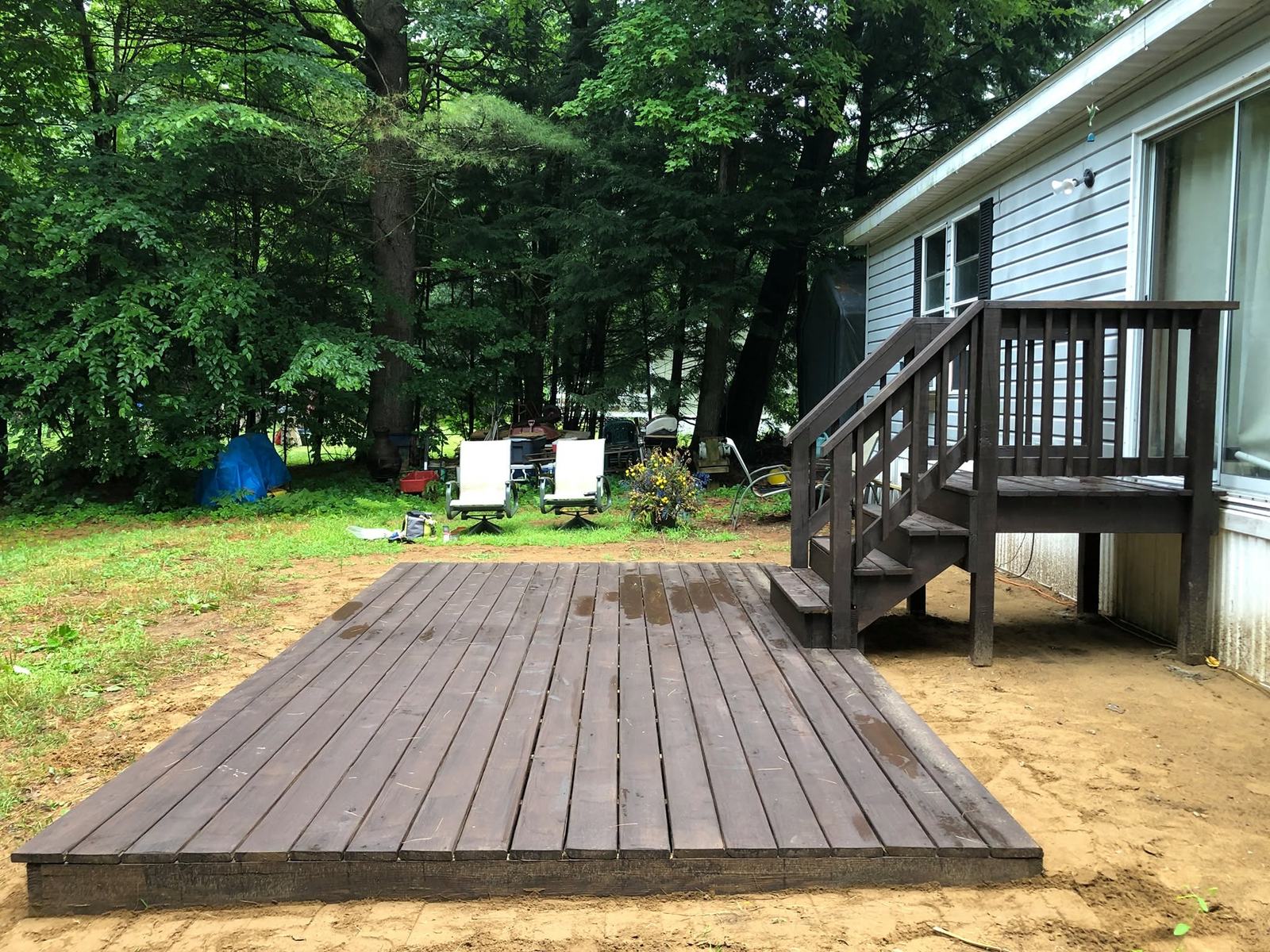
A deck needs replacing when the trouble is in the structure: rotted posts or joists, a ledger pulling off the house, connectors rusted thin, footings that have heaved, or a railing that wobbles no matter how many screws you drive into it. Gray, splintery boards on their own don't mean you need a new deck. They mean you need a refinish, or at worst new decking. You can't tell which from the top, so don't try.
Start underneath
The boards you walk on are the cheap, replaceable part. What matters is what's holding them up: posts, beams, joists, the ledger bolted to the house, and the footings in the ground.
So get under the deck with a flashlight and a flat screwdriver. Push the tip into the wood where water sits. That means the tops of posts, the ends of joists, the spots where joists rest on the beam, and the whole length of the ledger. Sound wood fights back. Rotted wood lets the screwdriver sink in, or comes away in soft, stringy bits.
One or two soft spots in the decking is a repair. Soft framing in more than a couple of places usually means the frame is done.
The eight things we look for
1. Rot in the posts, beams or joists. This is the most common reason a deck can't be saved. It starts where wood sits on wood and stays wet: the top edge of the beam under each joist, or joist ends that were cut and never sealed.
2. A ledger pulling away from the house. The ledger is the board that ties the deck to the house framing. A gap behind it, water stains on the siding or foundation below it, or rusty bolts are all bad signs. Ledger failures are behind a lot of deck collapses. Our deck ledger inspection guide goes through it step by step.
3. Rusted or missing hardware. A deck built today hangs its joists in metal hangers, sits its posts in metal bases and ties things together with hurricane ties. Plenty of older decks have none of that. The joists are just toe-nailed to the ledger. Where there is hardware, look for heavy rust or flaking. Today's pressure-treated lumber eats plain steel faster than the old stuff did, so hangers and fasteners need to be rated for it, which in practice means hot-dip galvanized or stainless.
4. Posts buried in the ground. Older decks often have wood posts set right in the dirt or in a concrete hole. Treated or not, they rot at the ground line. The right way now is a metal post base on top of a concrete footing, with the wood held up out of the wet.
5. Footings that have moved. Frost lifts shallow footings and soft soil lets others sink. You'll see a deck that slopes a new way, a gap opening up at the house, stairs pulling away from the deck, or posts that are no longer plumb. Footings have to go below the frost line, and your building department can tell you how deep that is in your town.
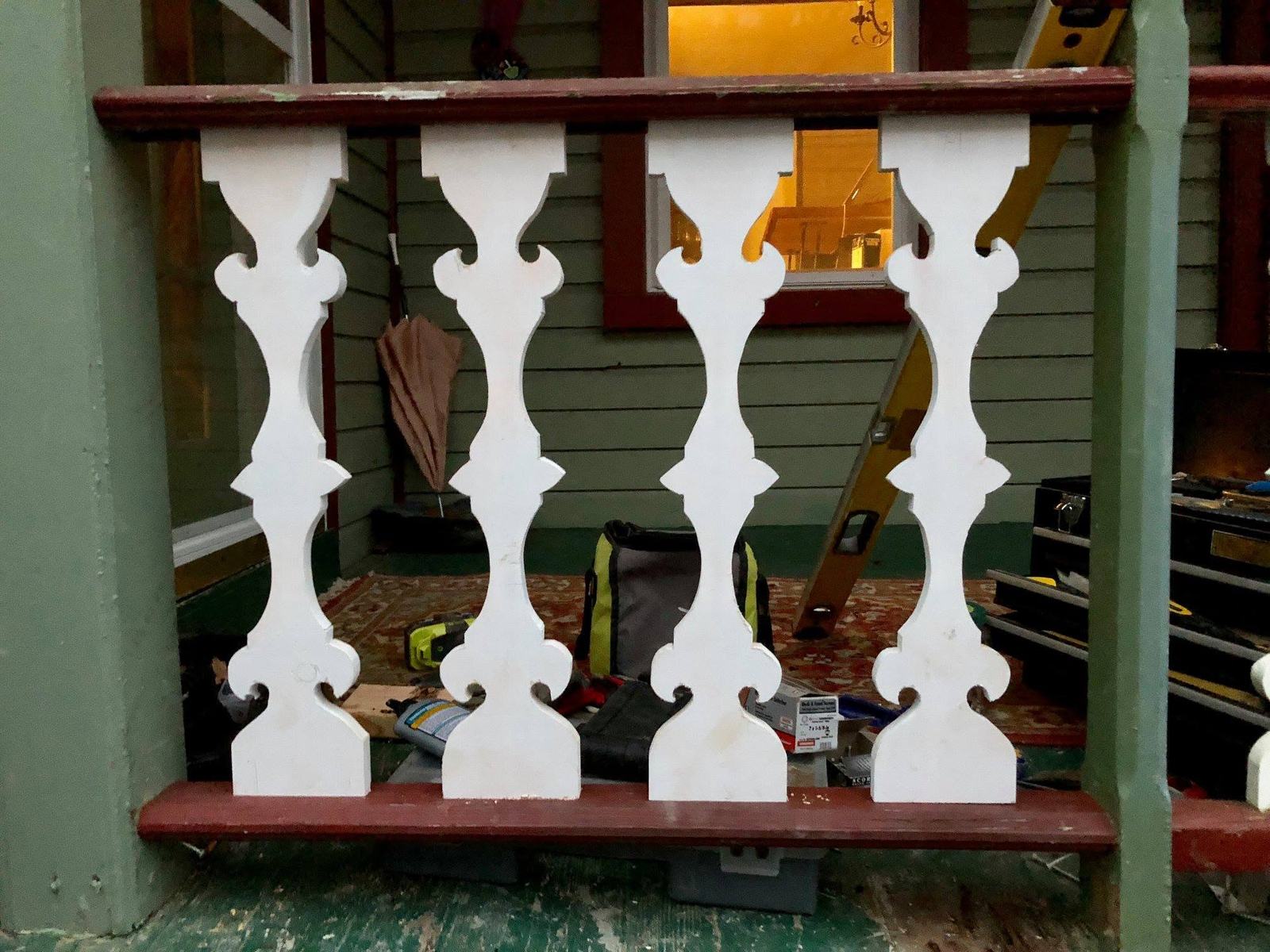
6. A railing that moves. Grab the top of a rail post and push hard. If it flexes, the post is loose, rotted at the bottom, or was never fastened to take that load. Under the residential code, a deck more than 30 inches off the ground needs guards at least 36 inches high, with gaps a 4-inch ball can't pass through. Lots of older decks fail both.
7. A bouncy or sagging floor. Bounce usually means joists too far apart, spans too long for the joist size, or framing weakened by rot. If the frame was undersized when it was built, new boards won't fix it.
8. Soft boards all over. A few cracked boards are maintenance. Soft spots across the whole floor tell you the deck has been wet for years, and the joists under those boards have been wet just as long.
Repair, resurface, or rebuild
Most decks land in one of three places:
| What you find | What usually makes sense |
|---|---|
| Frame and footings sound, finish worn | Clean it, swap a few boards, restain |
| Frame and footings sound, decking worn or rotted | New decking and rails on the old frame |
| Rot or damage in the frame, ledger or footings | Rebuild, usually on new footings |
Resurfacing is a fine option when the frame is truly sound, and it's how a lot of people make the switch to composite. But don't put new boards on a tired frame. Composite decking can outlast the joists under it by decades, and then you're tearing up a nearly new floor to fix the structure. We check the frame before we'll talk about decking. If you're weighing materials, here's our take on composite vs wood decking.
If your deck only looks rough on top, a good cleaning and a fresh coat may be all it needs. See how often to stain a deck for that route.
Old decks in Saratoga Springs
Saratoga Springs has decks of every age, from ones tacked onto the back of Victorians to ones that came with houses in the newer neighborhoods at the edge of the city. The older ones tend to have the same problems: a nailed ledger, posts in the dirt, rails too short. Some hold up fine for years. Others reach the point where every repair turns up the next one.
A word about old lumber. Pressure-treated wood made before about 2004 was usually treated with CCA, which contains arsenic. That's no reason to panic, but don't burn it, wear a dust mask when you cut or sand it, clean up well, and get rid of it the way your town says to.
Replacing a whole deck usually needs a building permit. Our post on permits in Saratoga Springs covers when to call the city, and choosing a deck builder in Saratoga Springs lists what to ask before you hire anyone, us included.
Frequently asked questions
How long does a wood deck last in upstate New York?
There's no single number. A deck with good drainage, rated hardware, posts up off the ground and regular stain can last a long time. One with buried posts, a nailed ledger and years between coats can rot out much sooner. Look at the frame, not the build date.
Can I just replace the deck boards?
Yes, if the frame, ledger, footings and hardware are all sound and the joists are spaced right for the new boards. Composite often needs joists closer together than wood does, so check the manufacturer's spacing before you order.
Is a wobbly railing dangerous?
It can be. A guard that gives way when someone leans on it can cause a bad fall, especially off a high deck. Keep people away from that section until the posts are fixed or the rail is rebuilt.
We repair, resurface and rebuild decks, stairs and railings in Saratoga Springs and the towns around it. When we come out, we'll be under the deck before we're on top of it. Our decks, stairs and railings page shows some of that work.